The Corruption of Evangelical Power in the Quad Cities: A Call to Return to Justice
The Corruption of Evangelical Power in the Quad Cities: A Call to Return to Justice
I. Introduction: When Churches Forget Their Purpose
Across the Quad Cities, certain evangelical churches have amassed extraordinary wealth, influence, and cultural power. Their buildings rise like monuments, their budgets rival small corporations, and their worship services resemble professional concerts more than spaces of spiritual reflection. Yet for all their resources, their public silence on issues of justice is deafening.
In a region where homelessness, poverty, addiction, and exploitation remain urgent realities, churches such as City Church and Coram Deo have chosen a path of comfort rather than courage. They receive millions of dollars in tithes and donations, employ pastors with generous salaries, and invest in high‑end sound systems, lighting rigs, and performance stages. But when it comes to speaking out for the vulnerable, the oppressed, or the exploited, their voices fall silent.
This silence is not neutral. It is a betrayal of the very scriptures they claim to uphold.
The Hebrew prophets warned against this kind of religious hypocrisy. Isaiah declared, “Learn to do good; seek justice, rescue the oppressed, defend the orphan, plead for the widow” (Isaiah 1:17). Jesus himself taught that the true measure of faith is found not in performance, but in compassion: “Whatever you did for the least of these, you did for me” (Matthew 25:40).
Yet in the Quad Cities, some of the wealthiest churches have chosen spectacle over service, comfort over courage, and political alignment over prophetic responsibility.
II. Wealth Without Witness: The Failure of Local Megachurches
Coram Deo in Davenport boasts thousands of members, a massive budget, and a sprawling campus. City Church sits just blocks away from some of the most vulnerable unhoused residents in Davenport. Both institutions have the financial capacity to transform lives, support shelters, fund addiction recovery, or provide direct aid to families in crisis.
Instead, their priorities tell a different story.
City Church recently invested millions of dollars into purchasing a coffee shop and a high‑value building, not to expand community services, but to expand their brand. Coram Deo, despite its size, rarely speaks publicly about local poverty, human trafficking, or the exploitation of vulnerable people. There has been no organized call for justice for the victims of Jeffrey Epstein or for survivors of trafficking in our own region. There has been no mobilization to support the unhoused population living within walking distance of their sanctuaries.
But there is no shortage of sermons condemning LGBTQ people. No shortage of pressure to conform to rigid gender hierarchies. No shortage of political messaging that aligns with a narrow ideological worldview.
This selective morality stands in direct contradiction to the teachings of Jesus, who warned, “Woe to you… for you tithe mint and dill and cumin, and have neglected the weightier matters of the law: justice and mercy and faithfulness” (Matthew 23:23).
Justice. Mercy. Faithfulness. These are not optional. They are the core of Christian ethics.
III. The Manufactured Worship Experience: How Spectacle Replaces Substance
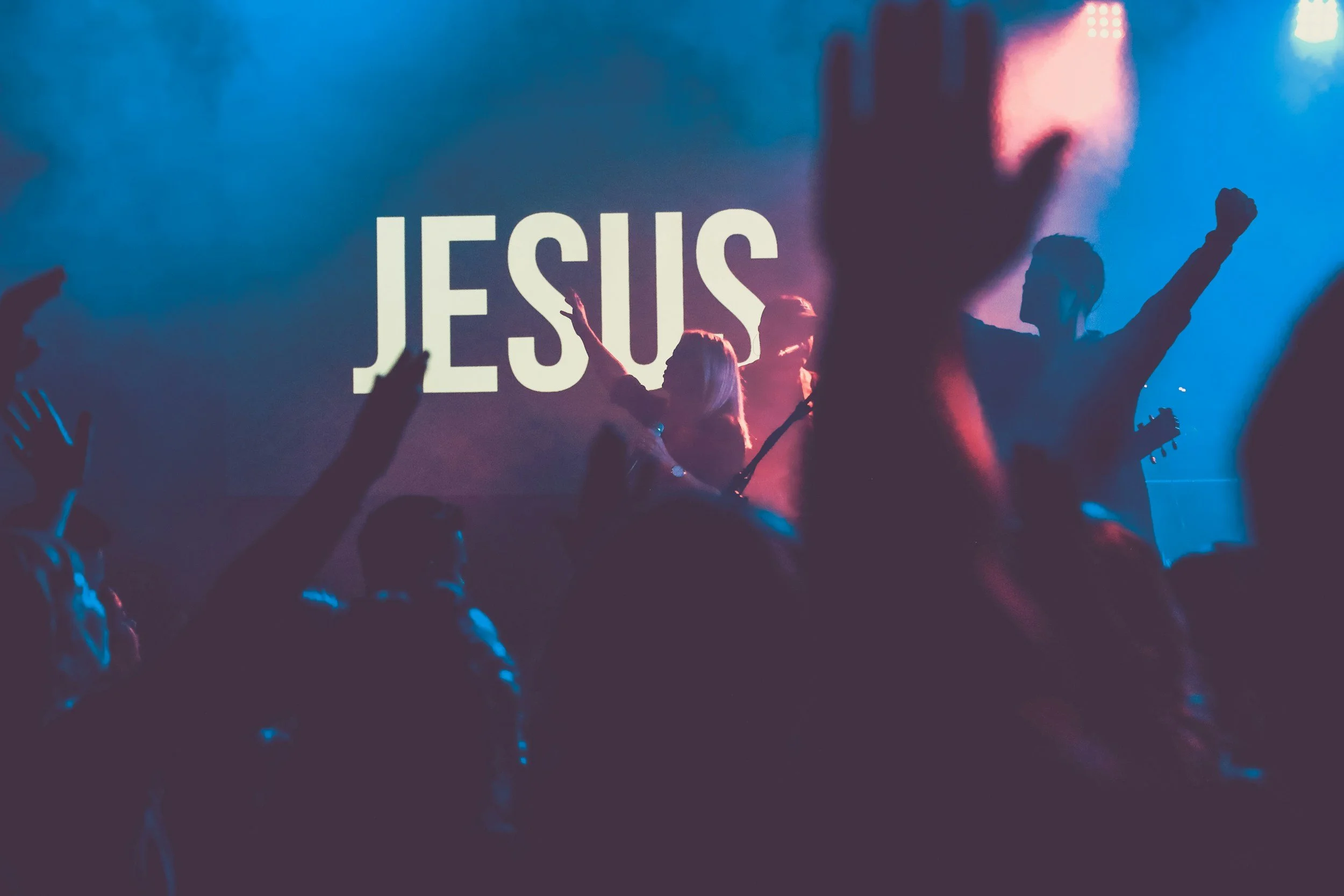
One of the most effective tools of modern evangelicalism is emotional manipulation through performance. Neon lights, fog machines, rock‑band worship teams, and carefully scripted sermons create an atmosphere that feels spiritual but often lacks depth. The experience is designed to be easy, comforting, and non‑confrontational.
This is not accidental.
A message that challenges injustice risks alienating donors. A sermon that confronts racism, exploitation, or economic inequality risks upsetting the comfortable. A church that prioritizes the poor over the powerful risks losing its place in the local hierarchy.
So instead, many evangelical churches offer a faith built on personal guilt rather than collective responsibility. They preach obedience rather than liberation. They uphold whiteness as the cultural norm, silence women under the guise of “biblical order,” and discourage critical thinking by framing dissent as rebellion against God.
This is not the church Jesus envisioned.
Jesus overturned the tables of the money‑changers. He confronted religious leaders who abused their power. He sided with the poor, the sick, the outcast, and the oppressed. He warned, “You cannot serve both God and wealth” (Matthew 6:24).
Yet in the Quad Cities, wealth has become the measure of success, and silence has become the price of belonging.
IV. What a Church Should Be: A Community of Liberation
A church is not defined by its music, its branding, or its real estate portfolio. A church is defined by its commitment to justice, compassion, and community.
Worship is not singing songs under stage lights. Worship is how a community lives out its values.
A church that raises money to help the poor is practicing worship.
A church that feeds the hungry is practicing worship.
A church that protects the vulnerable is practicing worship.
A church that confronts injustice—even when it is uncomfortable, is practicing worship.
The early Christian communities pooled their resources so that “there was not a needy person among them” (Acts 4:34). They shared food, tools, and labor. They cared for widows, orphans, migrants, and the sick. Their faith was not a performance; it was a practice.
By contrast, much of modern evangelicalism has become a political machine an engine of cultural conformity rather than a force for liberation. It has aligned itself with power instead of challenging it. It has chosen ideology over empathy. It has weaponized scripture against minorities instead of using it to uplift the oppressed.
This is not Christianity. It is indoctrination.
V. A Call to Accountability and Renewal
The Quad Cities deserve better than churches that hoard wealth while ignoring suffering. Survivors of trafficking deserve better than silence. LGBTQ youth deserve better than condemnation. Unhoused residents deserve better than being treated as an inconvenience.
And the teachings of Jesus deserve better than being used as a shield for political agendas.
This op‑ed is not a call to abandon faith. It is a call to reclaim it.
It is a call for churches to return to the radical compassion of the Gospels.
A call for pastors to speak truth even when it costs them.
A call for congregations to demand transparency, justice, and accountability.
A call for communities to build new forms of spiritual life rooted in liberation, not control.
The Quad Cities can be a place where faith fuels justice, where churches stand with the oppressed, and where spiritual communities become engines of healing rather than instruments of harm.
But only if we are willing to name the corruption, confront it, and choose a different path.
